
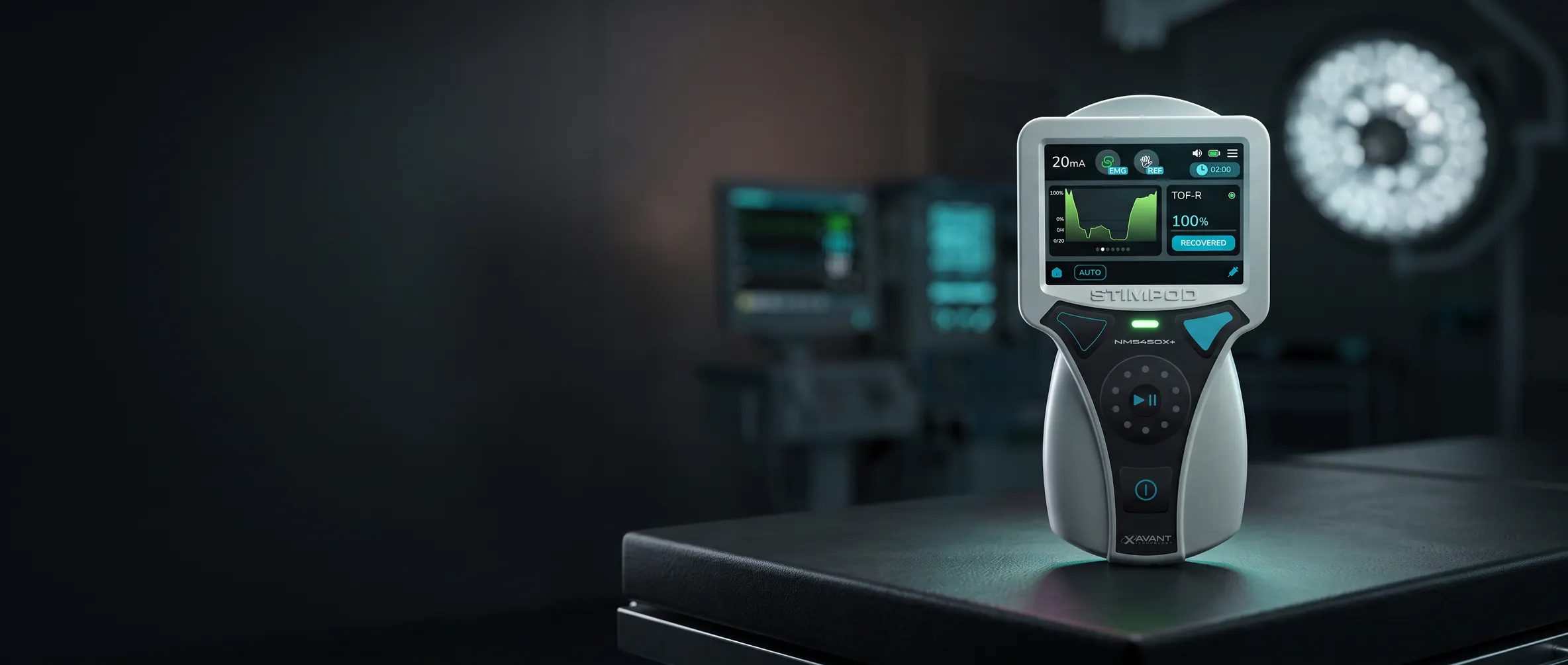
Stimpod™ NMS450X+
A quantitative neuromuscular monitor with AMG and EMG in one handheld device, with TOF, PTC and DEP modes and integrated nerve location. Clinical intelligence you can carry into any operating room.
Saving 80% on your cost per caseConsumables per case, with AMG on routine cases and EMG on the rest, compared with EMG on every case
Two modalities, one number you can trust.
Most monitors make you choose between AMG convenience and EMG precision. The NMS450X+ carries both, so the right modality is always in your hand. AMG is the cost-effective default for open, accessible arms; EMG takes over when the arms are tucked or the case runs robotic or laparoscopic.
AMG + EMG, combined
Switch modality to suit the case and the patient, without switching devices. One platform, every workflow.
Truth in Signal
We never display data we can't trust. Signal quality is validated continuously, so every TOF ratio is one you can stake a decision on.
Nerve location, built in
Integrated nerve mapping and locating for regional anaesthesia. The same handheld does a second clinical job. See how
One device for every patient and every setup.
EMG when the arms are tucked, AMG when they're open. Adults, children from 28 days after birth with the small EMG electrode, and veterinary patients, all from the same handheld, with no second device to buy or learn.
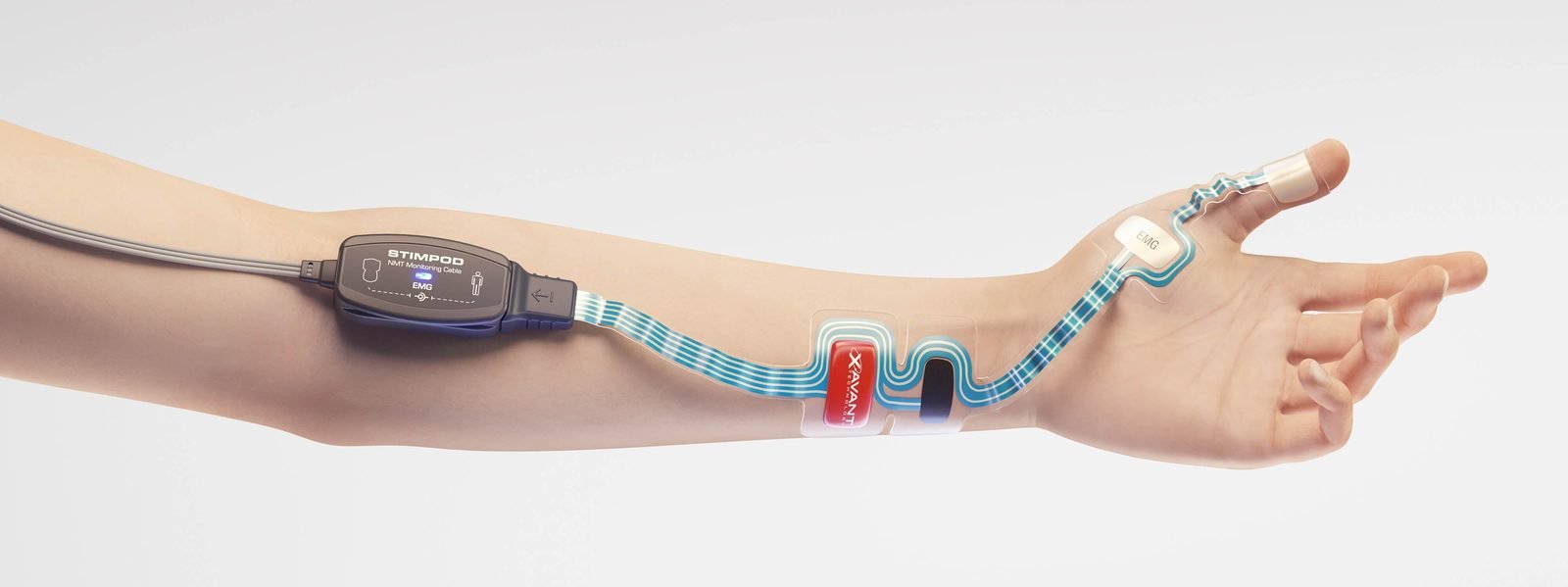
For arms you can't reach
The patented ripple electrode fits either hand and any hand size, staying adhered through long cases and repeated patient movement, so robotic, laparoscopic and tucked-arm setups stay monitored. In the 2024 Anesthesiology bench study, Stimpod™ EMG held a gauge SD of 0.021 against the laboratory mechanomyograph's 0.022.
- Electrodes
- Large for adults · small for children from 28 days after birth
- Best for
- Tucked arms, robotic and laparoscopic cases
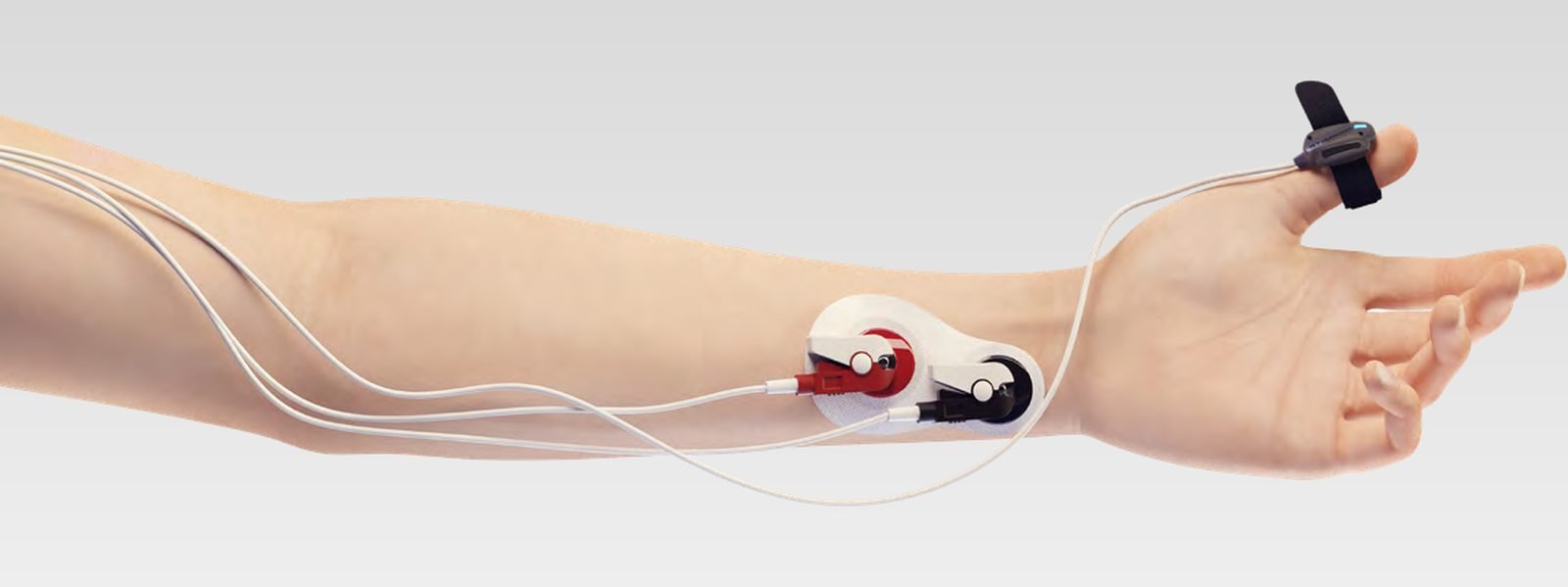
For everyday economy
A reusable sensor and the lowest cost per case, with setup at the ulnar, posterior tibial or facial nerve. In the same 2024 study it was the tightest acceleromyograph on test, at a gauge SD of 0.07 against 0.10 and 0.18.
- Sensor
- Reusable tri-axial accelerometer
- Patients
- Adult, paediatric and veterinary
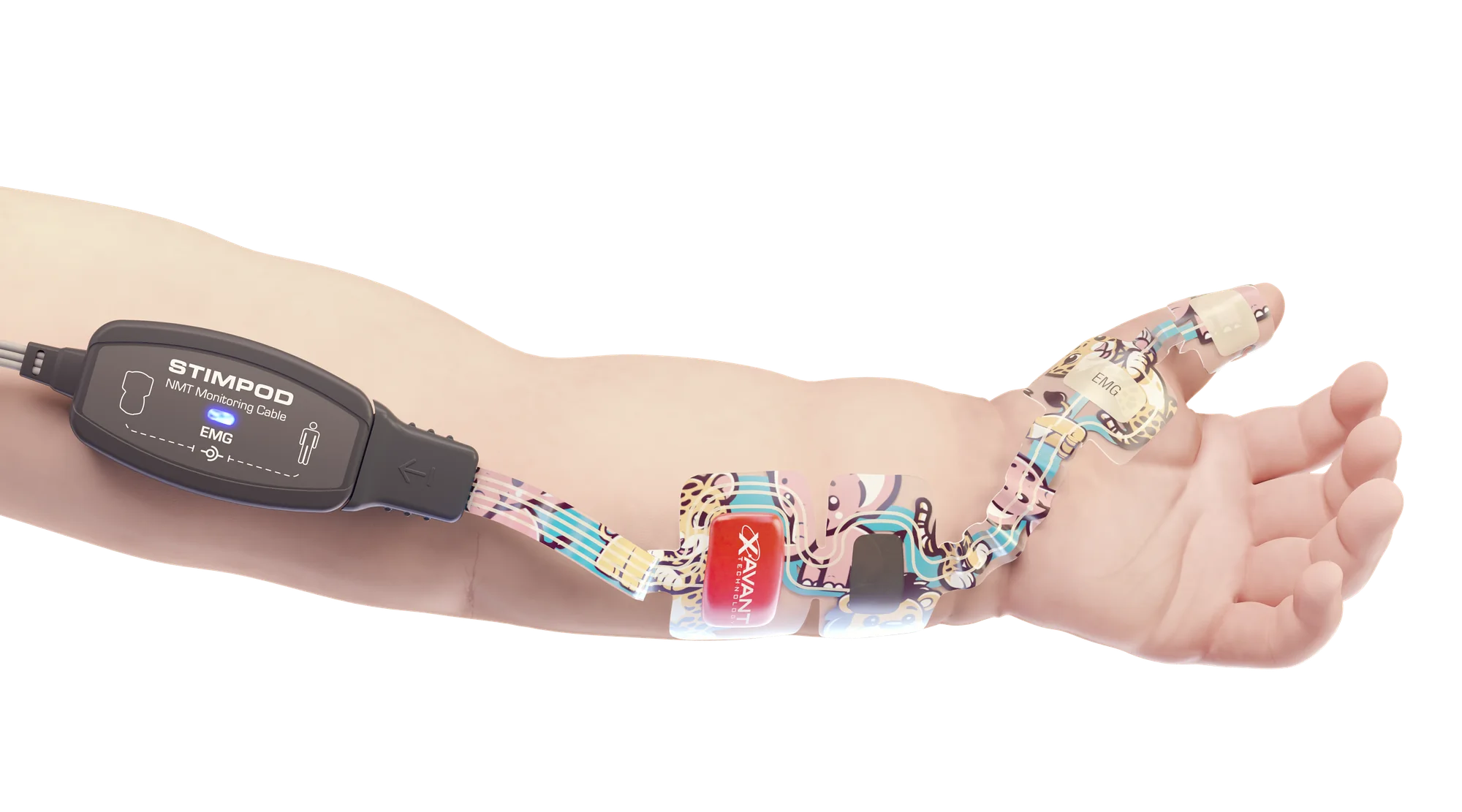
The small EMG electrode, for the youngest patients.
Children respond to neuromuscular blocking agents in their own way, so the dose, the timing of reversal and the moment of recovery all deserve a measured number. The small electrode brings the same EMG monitoring to children from 28 days after birth.
- Suitable from
- 28 days after birth
- Placement
- Either hand, left or right
- Adhesion
- Approved for up to 24 hours
- Order code
- XT-45009S · box of 20 · 24-month shelf life
- Works with
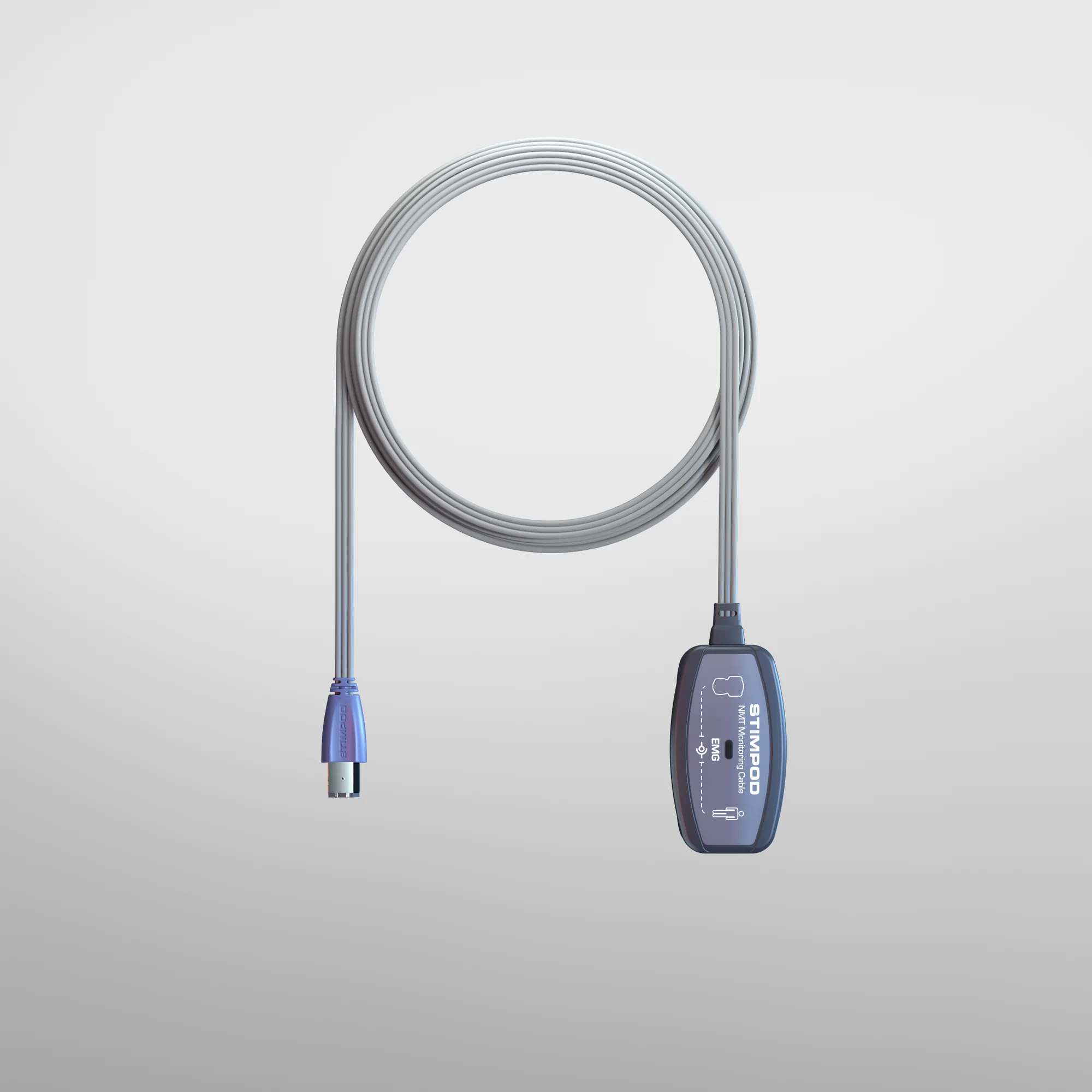
- Stimpod™ NMS450X+ and NMS450X, on the EMG monitoring cable
The only handheld NMT monitor supporting both AMG and EMG. So a hospital can standardise on one device and still choose the right modality, case by case.
What changed when one hospital monitored every case.
A reusable AMG sensor on routine cases and an EMG array only where the case needs one, compared with EMG on every case.
* Consumable cost per case, modelled in the cost benefit tool, where every assumption can be changed.
† Outcomes recorded before and after a hospital-wide programme that put quantitative monitors in all 28 anesthetizing locations, 24 of them Stimpod™ AMG. A single-centre before-and-after study, not a randomised trial. Weigel et al · Anesthesiology 2022;136(6):901-915
What does quantitative monitoring change?
Residual neuromuscular blockade is common, under-detected, and expensive. Measuring it, rather than estimating it, is what the guidelines now ask for.
Quantitative TOF gives a measured depth of block instead of a clinical impression, so dosing can be matched to the case in real time. Deep block held where surgery needs it, and reversal timed against a number rather than a guess.
Residual blockade is largely invisible to clinical assessment. Patients can lift a head and still be incompletely recovered. Confirming a TOF ratio before extubation is the only reliable way to rule it out, and it is where the reduction in post-operative complications comes from.
The savings are not only in the monitor. Measuring recovery reduces sugammadex usage, shortens PACU time, and lowers the downstream cost of complications. That is why the case for quantitative monitoring is usually made on the total cost of care, not the purchase price.
Fewer pulmonary complications means fewer extended stays. In a before-and-after study, Weigel et al. recorded median hospital stays falling from three days to two after quantitative monitoring became routine practice. A bed-day effect large enough to be visible at department level.
The ASA and ESAIC guidelines both call for quantitative monitoring whenever a neuromuscular blocking agent is given. A device in every theatre, rather than one shared between them, is what turns a guideline into standard practice.
Every acceleromyograph reads above 1.0 before any blocking drug is given, which is called overshoot. In the 2024 Anesthesiology bench study the Stimpod™ AMG read a mean TOF ratio of 1.10 without drugs, against 1.11 and 1.13 for the other two acceleromyographs. The Stimpod™ shows the ratio it measures, without normalising it to a baseline. Guidelines mention normalisation as a way to handle overshoot, but in the same study normalising the AMG readings moved their average to about 1.0 without narrowing their spread (gauge SD still 0.06 to 0.17), so it doesn't make any single reading more dependable. A clinician who knows that AMG reads high can allow for it when judging recovery against the 2023 ASA guideline, which asks for a TOF ratio of at least 0.9 at the adductor pollicis before extubation. When the arm is tucked, or you want a reading without overshoot, switch the same device to EMG.
Wedemeyer et al · Anesthesiology 2024;141(2):262-271 · Table 2 Thilen et al · Anesthesiology 2023;138(1):13-41
Sugammadex is dosed by depth of block: the label dose is 2 mg/kg once the second twitch has returned and 4 mg/kg at 1 to 2 post-tetanic counts, so the depth has to be measured. Reversal without monitoring still leaves some patients weak: in a multicentre study where sugammadex was given with no monitoring, 4.3% of 117 patients had a TOF ratio below 0.9 after extubation. The 2023 ASA guideline recommends a quantitative monitor to confirm a TOF ratio of at least 0.9 before extubation, whichever reversal drug is used.
Kotake et al · Anesth Analg 2013;117(2):345-351 Thilen et al · Anesthesiology 2023;138(1):13-41
Run the numbers for your theatre.
The guidelines ask for quantitative monitoring, and whether it pays for itself depends on your hospital. Start from up to 80% lower monitoring cost per case, then model it on your case volume, your drug usage and your complication rate. The saving you present to your finance team is yours, not ours.
The instrument itself.
All of it depends on one thing: reading the block at a glance, mid-case, without stopping.
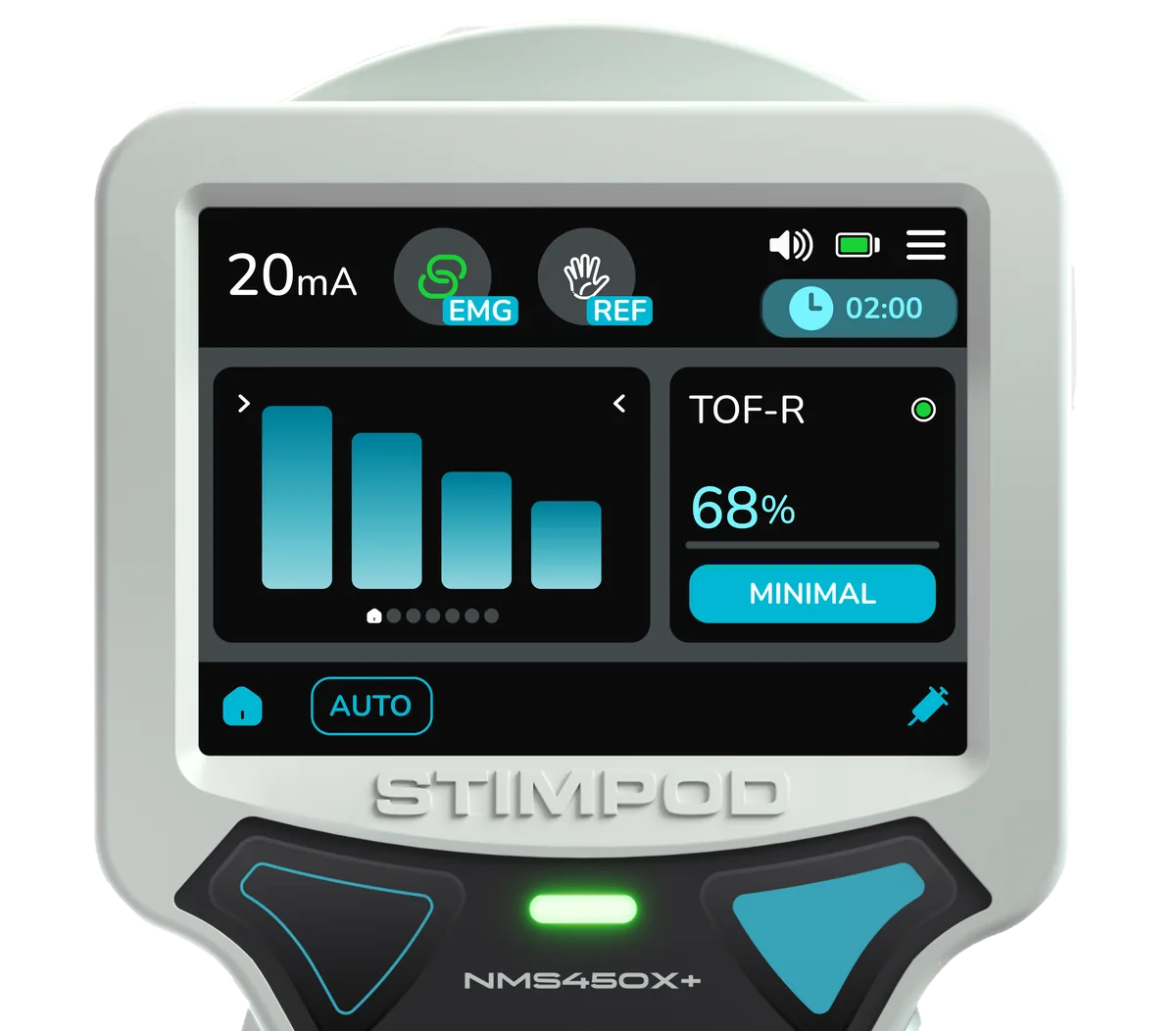
Full-colour touchscreen
A 3.5″ capacitive colour screen with fast response. Readable across the theatre and navigable in one touch, so reading the block never costs you attention.
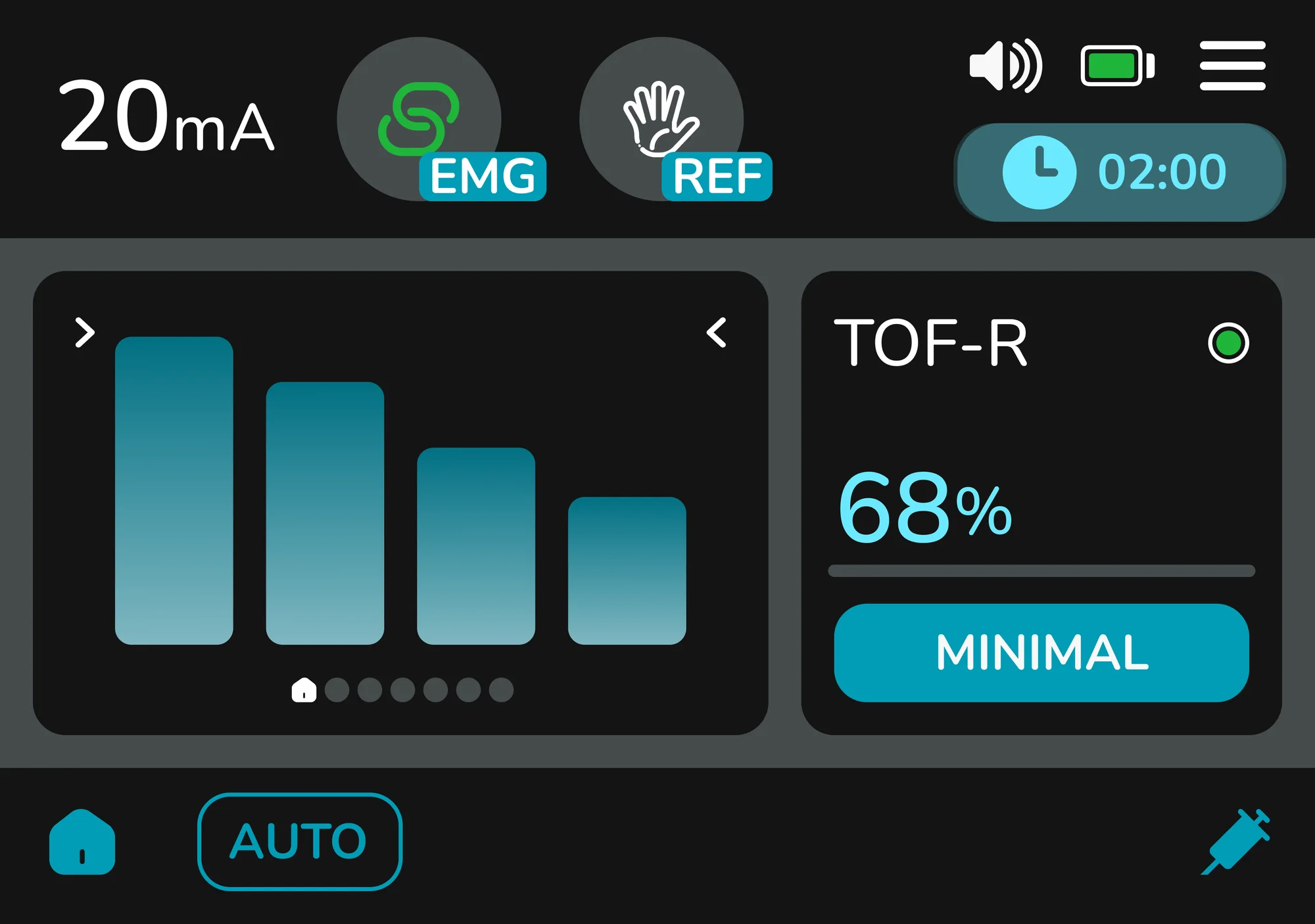
Depth-of-block trend graph
The whole case on one axis. Your patient's pharmacokinetic response to paralytics and reversal agents over time, rather than a single number in isolation.
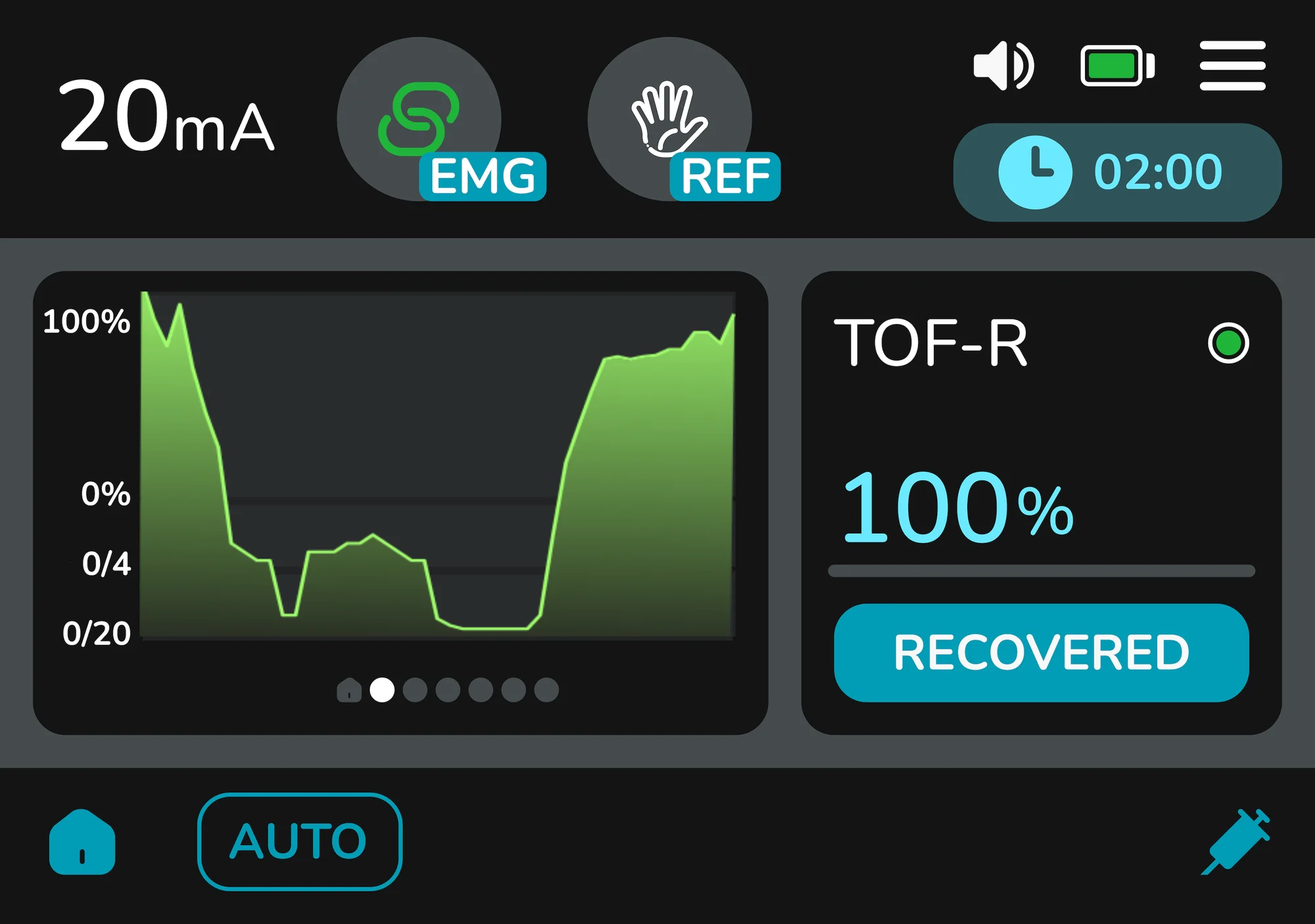
EMG waveforms in real time
Review the morphology of the waveform itself, so you can judge the quality of the data behind the number, not just trust it.
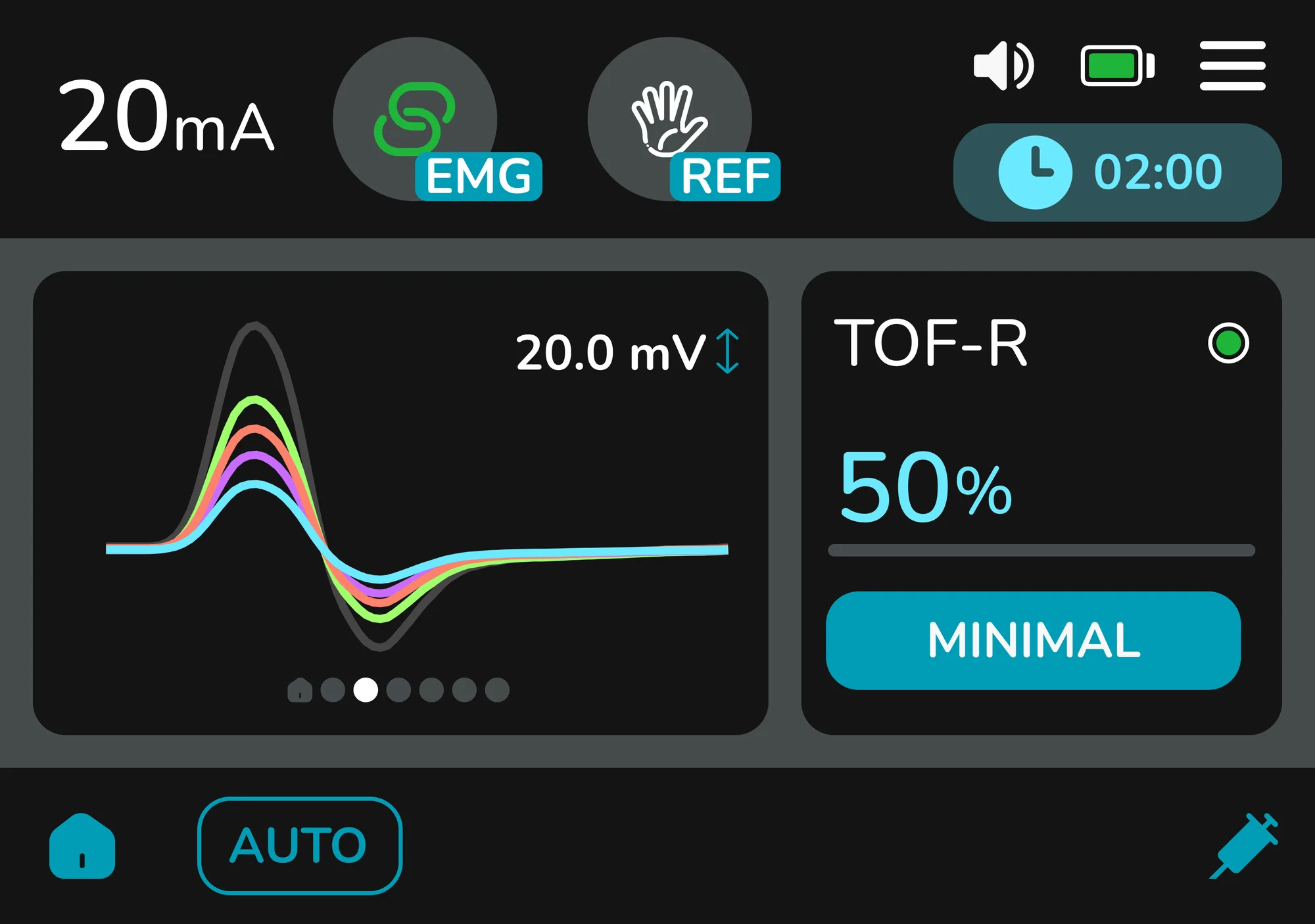
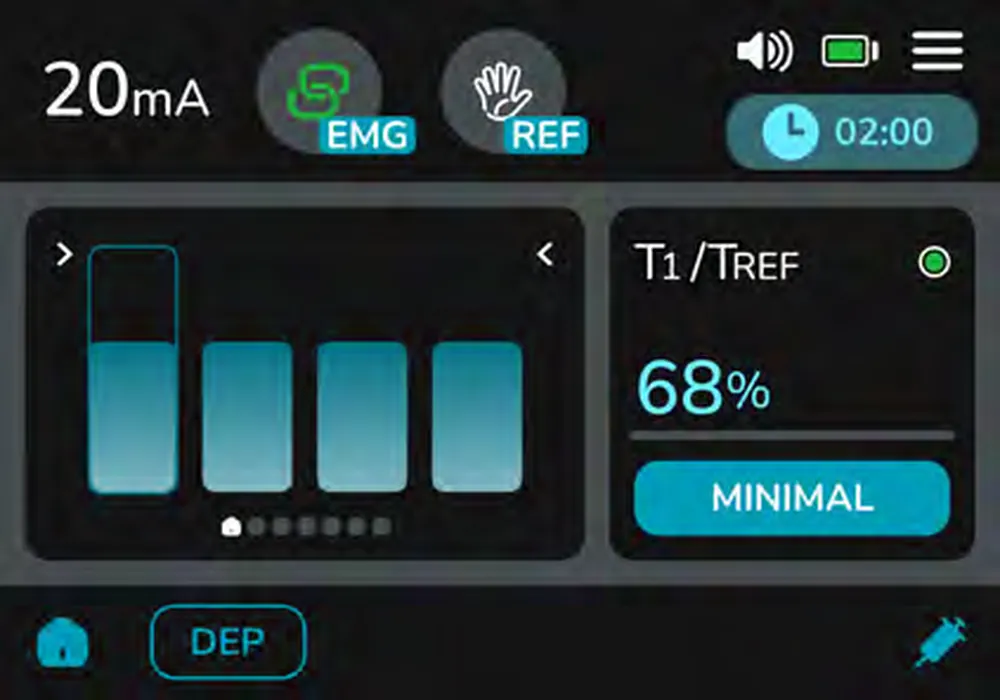
Dedicated DEP mode
Depolarising muscle relaxants monitored in a purpose-built mode with a T1/TREF readout, as international guidelines recommend.
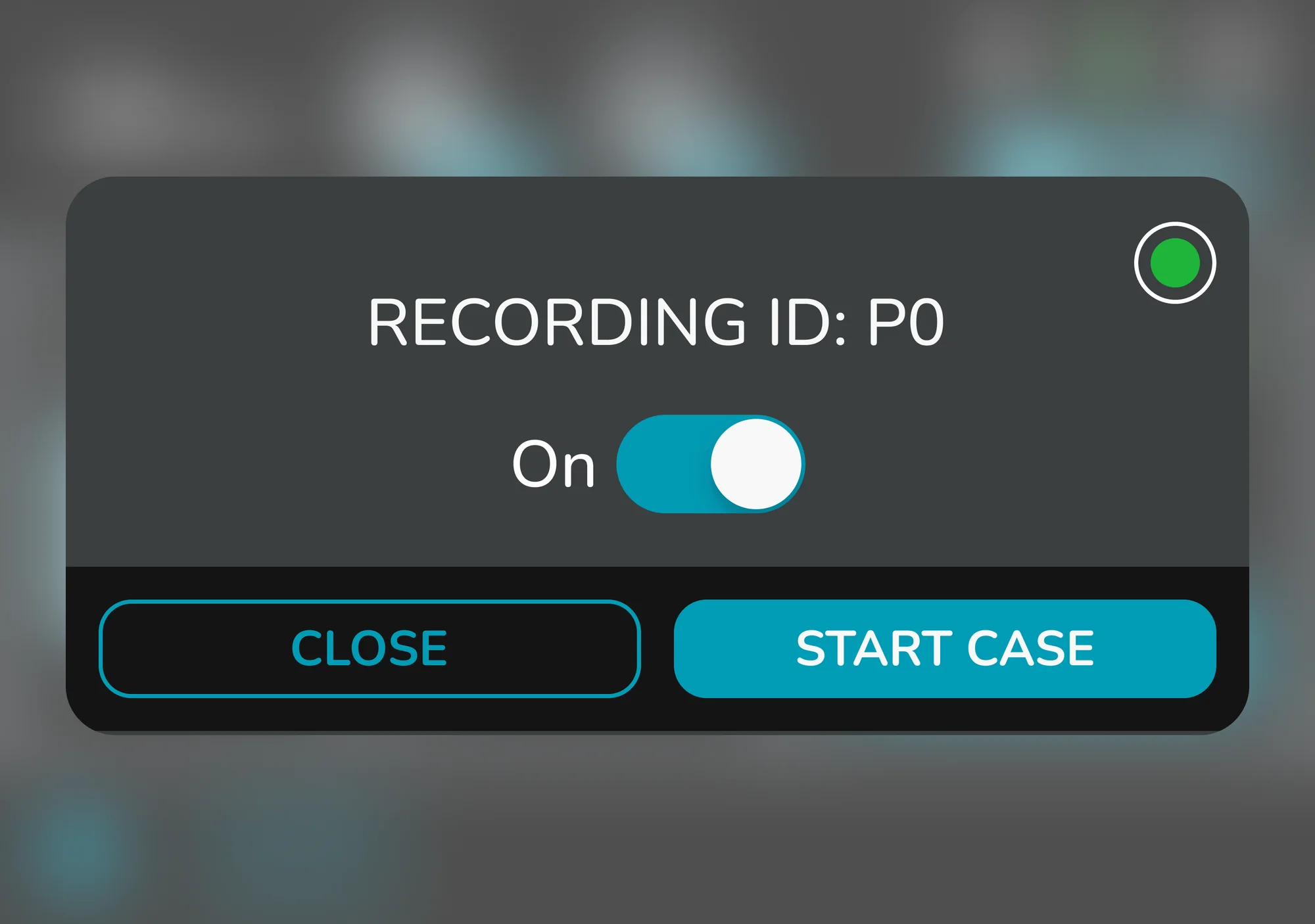
One-touch case management
Start Case begins automated recording and case handling. One press, no menu diving mid-induction.
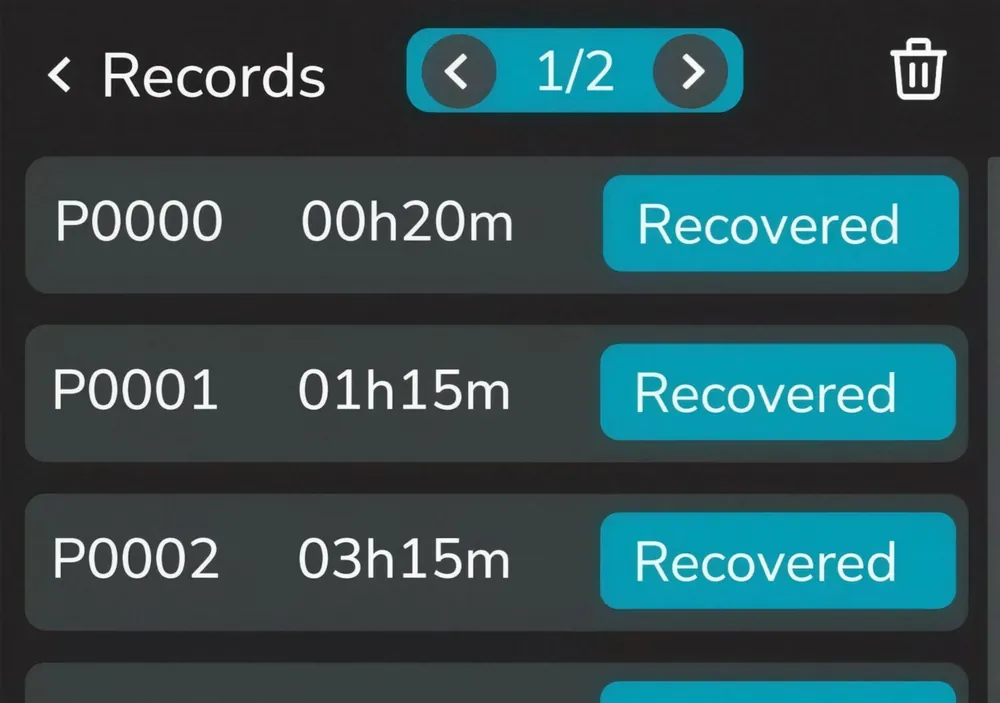
Seamless data recording
Every case retained on the device with its duration and recovery state, ready to download or hand to X-Link for the EMR.
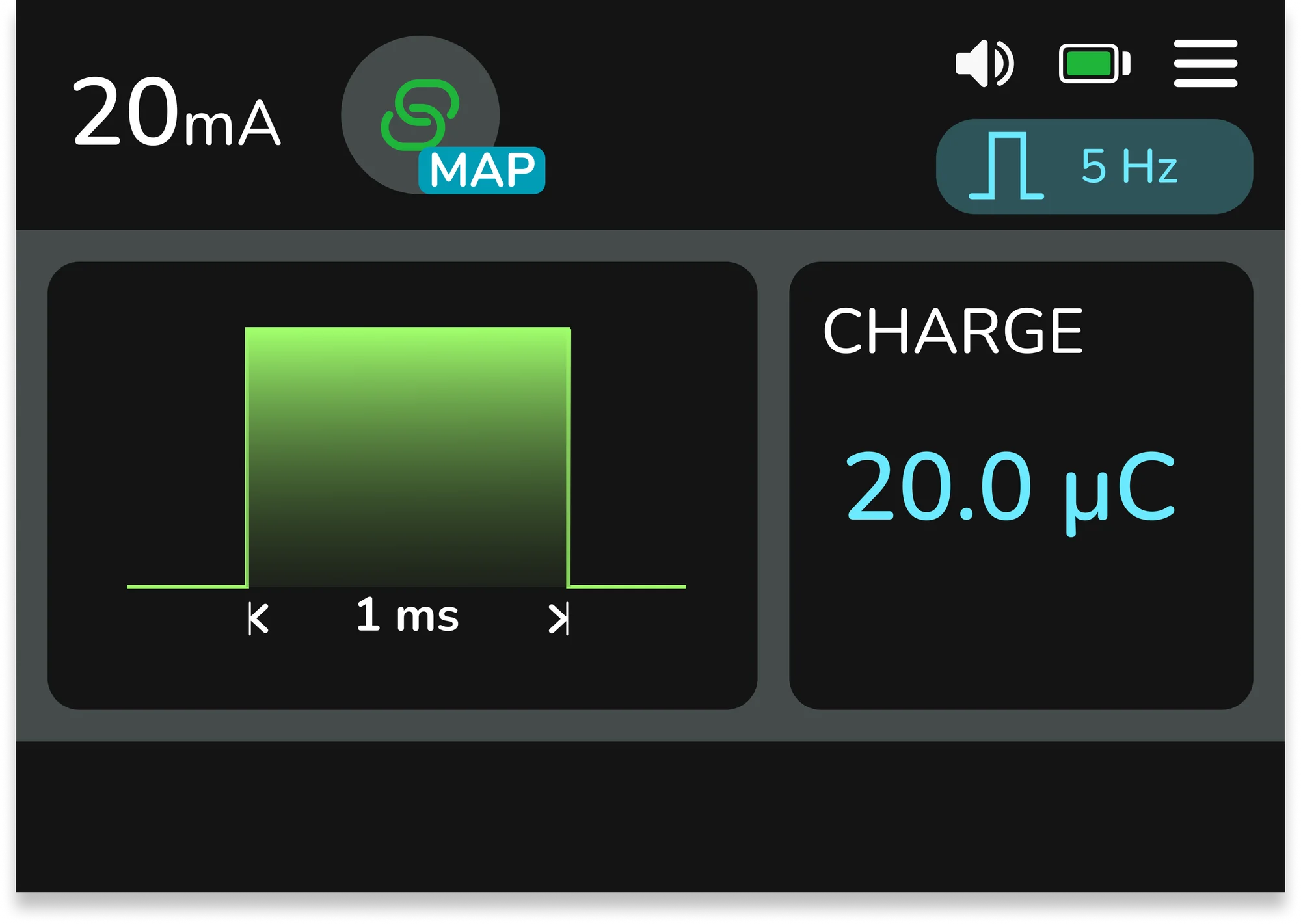
Find the nerve before you place the block.
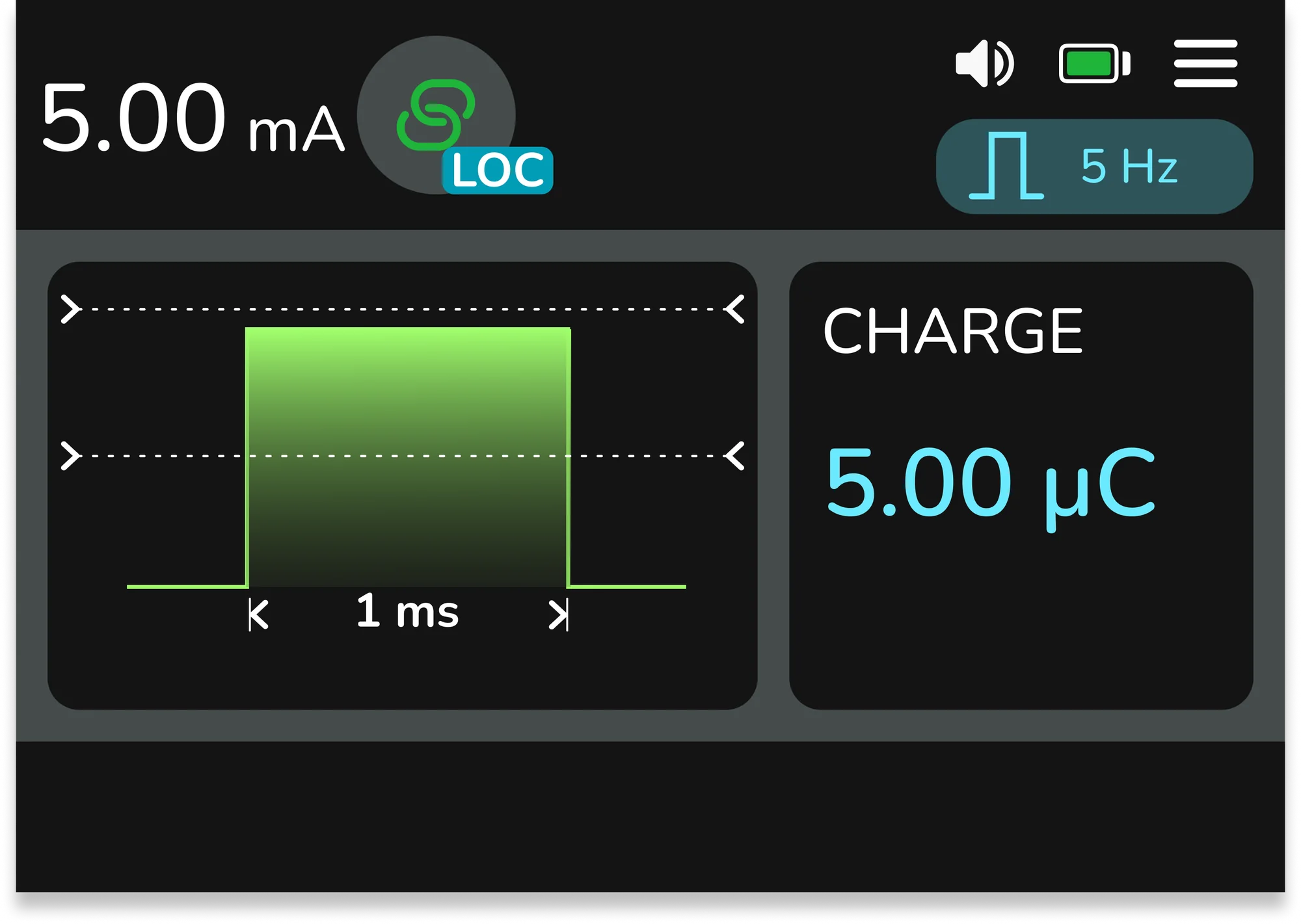
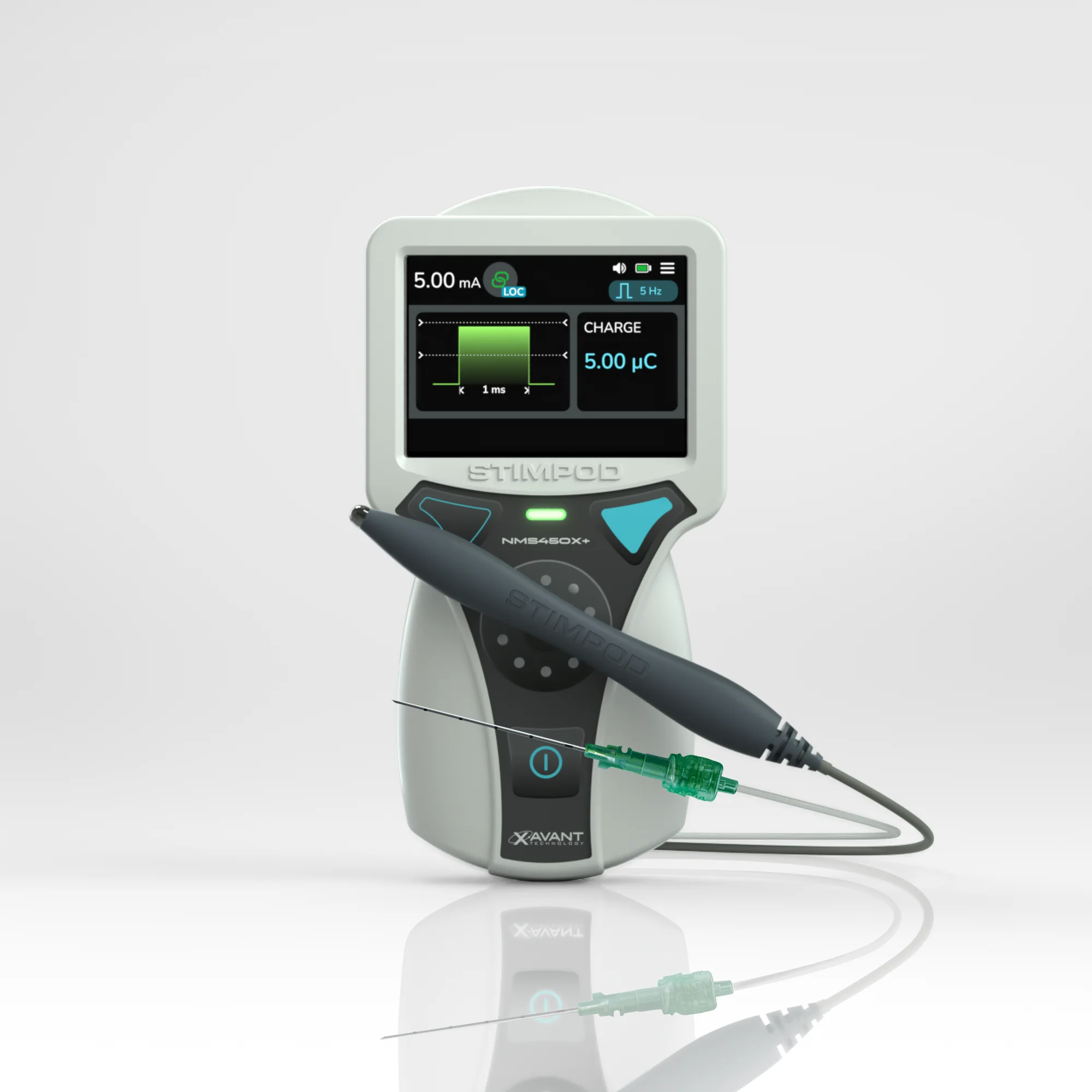
The same handheld does regional anaesthesia work. With the MapLoc cable, mapping mode traces the nerve through the skin at up to 20 mA, and locating mode guides the stimulating needle at up to 5 mA, both at 1, 2 or 5 Hz.
Cables, mounts and the case
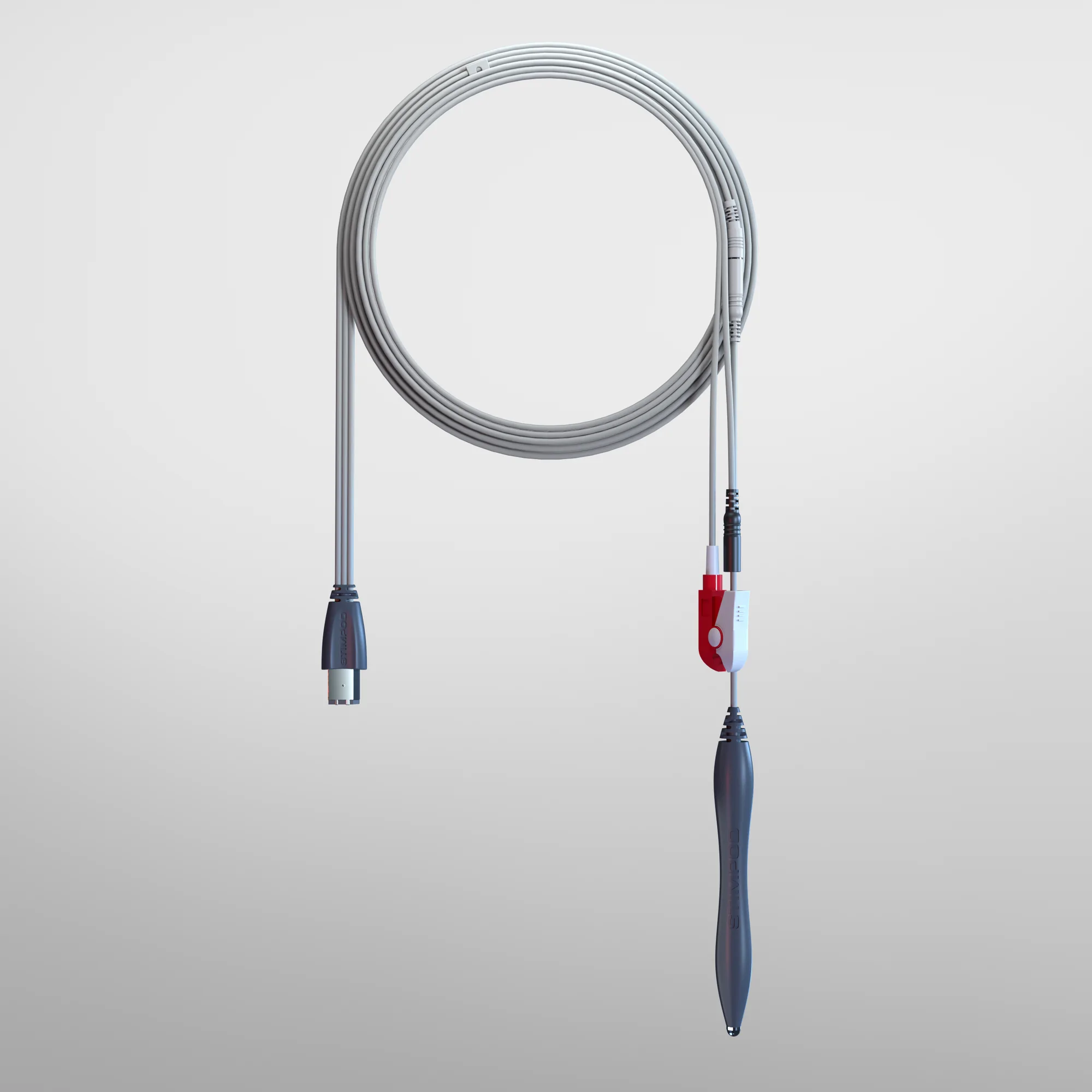
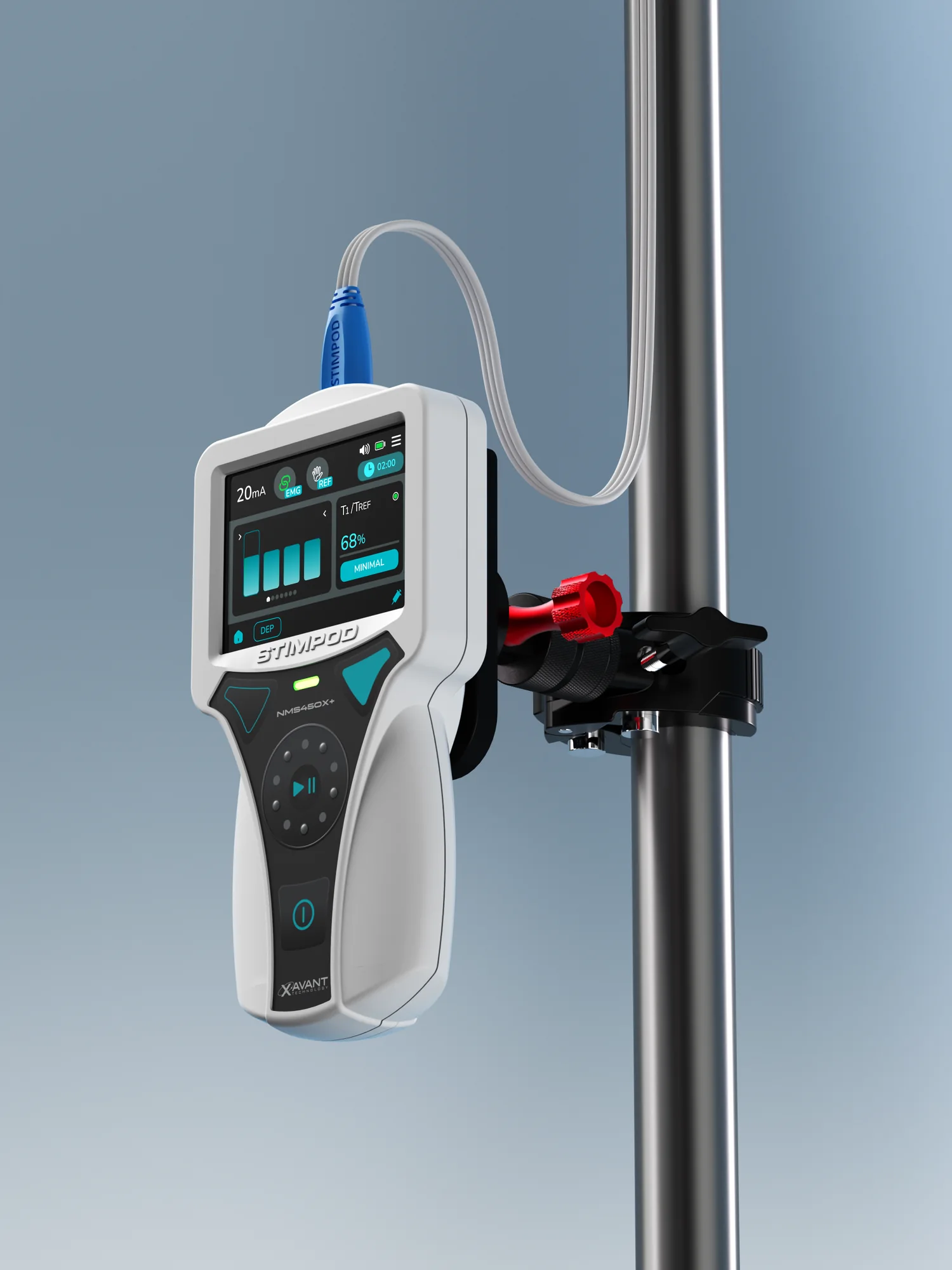
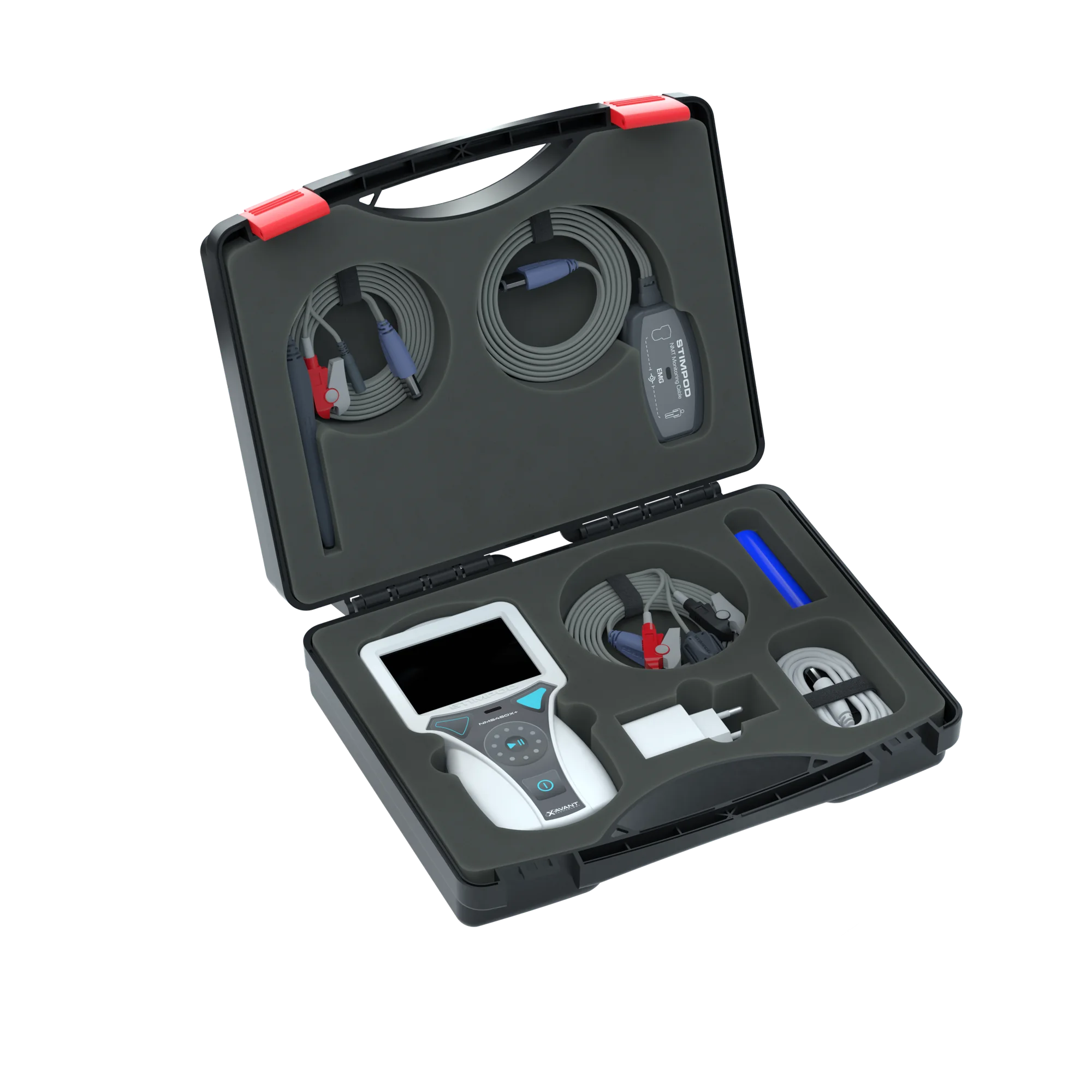
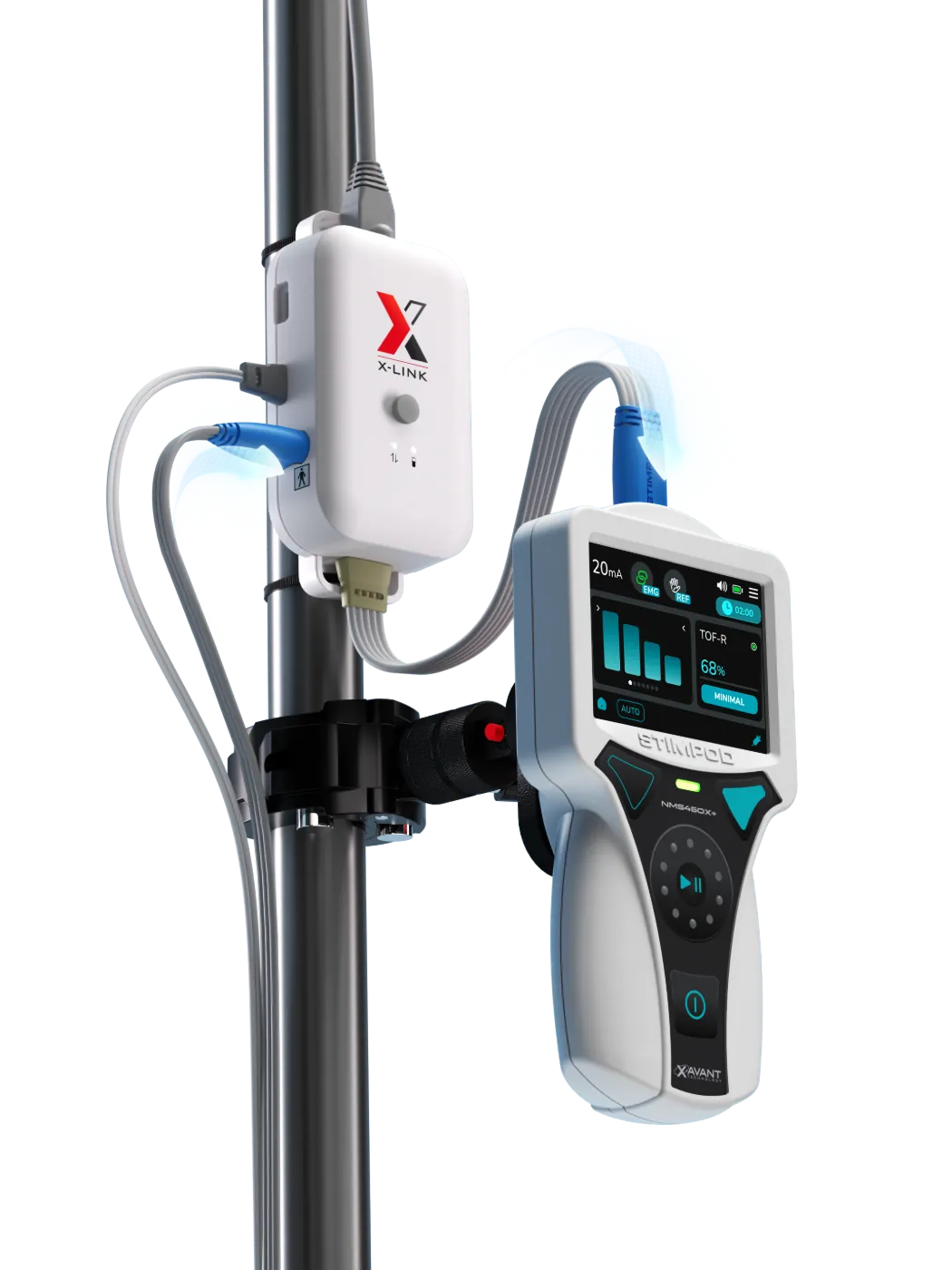 X-Link, EMR integration
X-Link puts every result in the record.
A secure bridge between the Stimpod™ NMS450X+ and your hospital EMR. Neuromuscular data transfers automatically over Ethernet. X-Link doesn't alter it, analyse it, or change how the Stimpod™ behaves.
Built to run all day.
A full theatre list on one charge, and a battery you can swap rather than wait for.
Every number, on the record.
| NMT mode | Nerve mapping | Nerve locating | |
|---|---|---|---|
| Stimulus type | Current controlled | Current controlled | Current controlled |
| Waveform | Monophasic square wave | Monophasic square wave | Monophasic square wave |
| Pulse width | 200 µs ± 5% | 50 / 100 / 200 / 300 / 500 µs, 1 ms ± 5% | 50 / 100 / 200 / 300 / 500 µs, 1 ms ± 5% |
| Voltage | 400 V max | 400 V max | 100 V max |
| Current | 0–80 mA ± 5% | 0–20 mA ± 5% | 0–5 mA ± 5% |
| Frequency | 1, 2, 5, 50, 100 Hz ± 5% | 1, 2, 5 Hz ± 5% | 1, 2, 5 Hz ± 5% |
| Load impedance | 0–5 kΩ | 0–20 kΩ | 0–20 kΩ |
| Operational modes | AUTO · TOF · PTC · SMC · DEP · ST · DB · TET | ||
| NMT range of measurement | |
|---|---|
| AMG | ± 4 g acceleration, 30 milli-g minimum |
| EMG | ± 30 mV, 400 µV minimum amplitude |
| Power supply | |
|---|---|
| Battery | Removable rechargeable lithium-ion 21700 · 3.7 V, 5000 mAh |
| Internal charger | 5 V, 2 A via USB |
| External charger | 5 V, 2 A desktop · full charge in 5 h 30 min |
| Power consumption | |
| NMT AMG | 460 mW @ 130 mA · up to 35 hours continuous |
| NMT EMG | 520 mW @ 150 mA · up to 32 hours continuous |
| Mapping / locating | 426 mW @ 120 mA · up to 38 hours continuous |
| Physical attributes | |
|---|---|
| Display | 3.5″ 24-bit colour TFT LCD, capacitive touchscreen |
| Dimensions | 174 mm (L) × 90 mm (W) × 35 mm (H) |
| Weight | 195 g without battery · 265 g with battery |
| Operating temperature | 10–40 °C |
| Storage / transport temperature | 0–50 °C |
| Humidity | 90% RH operating, storage and transport |
| Atmospheric pressure | 50–106 kPa operating, storage and transport |
* Maximum continuous-use hours are stated at the recommended default display intensity; higher intensity reduces runtime. The battery cannot be charged internally while the device is in use. It is removable for external charging.
See the Stimpod™
in your operating room.
Tell us your cases and your country. A person replies within one business day with a demo plan for your theatre.